


In the metal processing industry, the laser tube cutting machine has become standard equipment. However, faced with a myriad of brands and configurations on the market, many buyers often find themselves in a dilemma: either paying too much or choosing the wrong machine.
As a professional laser equipment supplier, we break down the four most critical core components of a tube cutting machine: Servo Roller Support, Automatic Unloading Rack, CNC System, and Chuck Structure. Understanding these four points will allow you to accurately target and select the equipment that best suits your needs.
Part 1: Servo Roller Support & Automatic Unloading Rack: The Overlooked “Efficiency Multipliers”
Many buyers focus solely on the laser power, often neglecting the critical processes of material support and part collection. In reality, these two aspects directly impact machining precision and the level of automation.
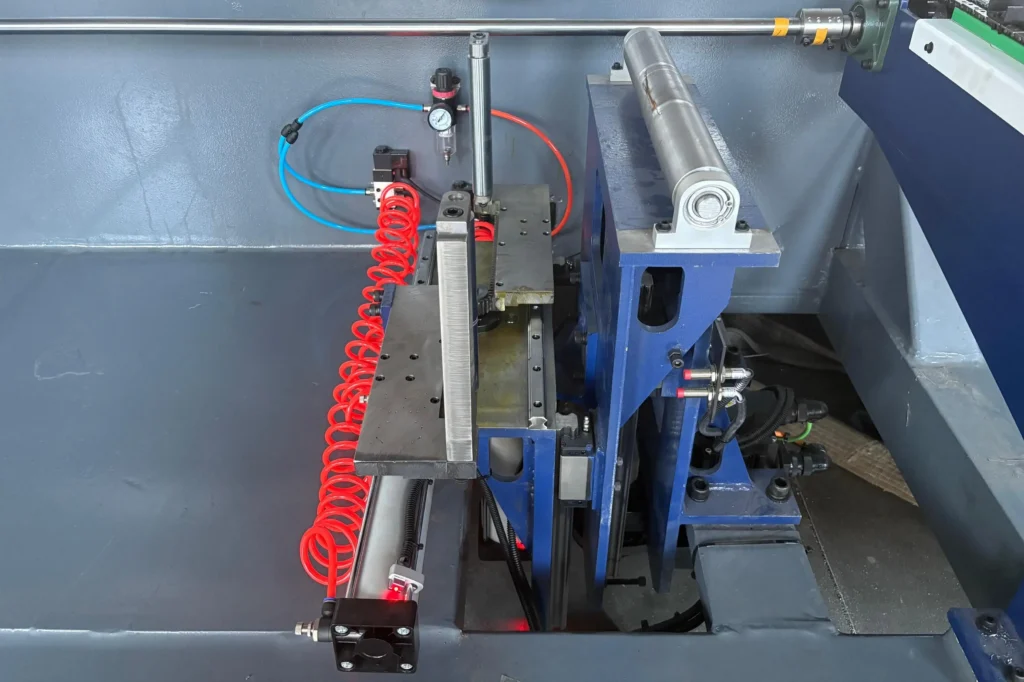
1. Servo Roller Support: More Than Just Support – A “Dynamic Balancer”
When cutting long tubes, the middle section will naturally sag due to gravity. If the roller supports cannot adjust dynamically, it will lead to cutting vibrations and inaccurate positioning.
Core Value: Driven by servo motors, these supports make real-time positional compensations based on the tube’s diameter changes and rotational status. This is especially critical when cutting square or rectangular tubes, as it eliminates caused by shifting centers of gravity, significantly enhancing cutting precision for long, slender workpieces. If your workpieces exceed 6 meters, this is a mandatory feature.
2. Automatic Servo Unloading Rack: Protecting Finished Parts and Enabling “Unattended Operation”
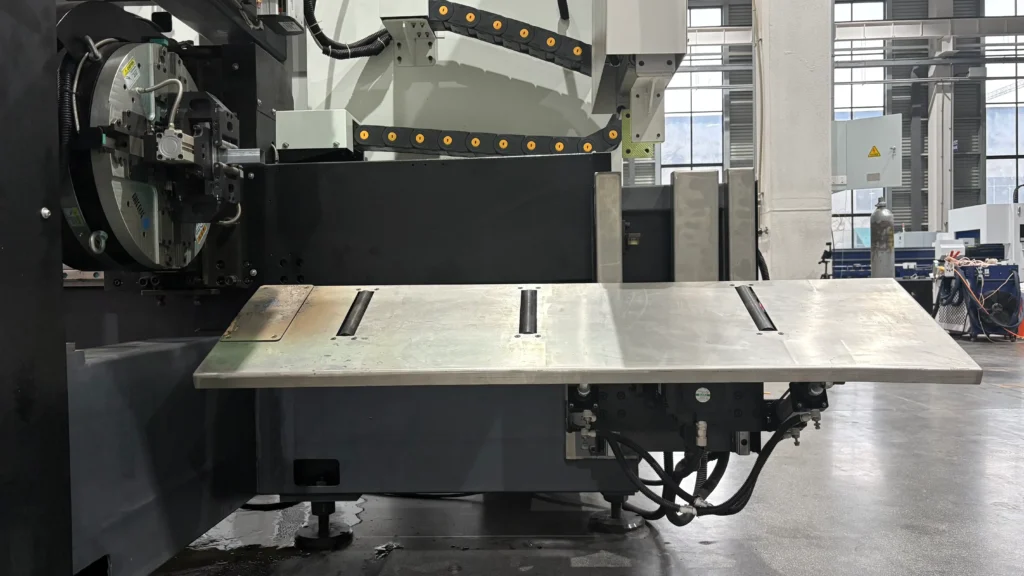
If finished parts simply “clang” as they fall into a bin, it can damage the cut edges and easily deform long tubes.
Core Value: An intelligent unloading rack automatically adjusts its support position according to the workpiece length, enabling gentle part handling and preventing impact damage. More importantly, it seamlessly integrates with automated production lines, reducing manual intervention – a fundamental component for realizing a “lights-out” factory.
Part 2: The BOCHU System: The “Most Powerful Brain” of Your Equipment
The operating system dictates programming efficiency and cutting quality. BOCHU currently offers tailored solutions for different applications. Choosing the correct version is crucial.
1. Profile Cutting System: Specifically Designed for H-Beams, Channels, and Other Complex Shapes
Structural steel profiles like H-beams often have inherent twists, bends, or deformations.
Core Advantage: Equipped with a contour scanner, the system detects the actual deformation of the profile in real-time and dynamically compensates for it. Even if the raw material is slightly bent, the holes and ends cut will remain straight. This solves a major challenge for manufacturers in the steel structure and bridge building industries.
2. Bevel Cutting System: “Light Fusion Technology” for Stronger Welds
Traditional bevel cutting can easily damage the inner wall of the tube.
Core Advantage: Utilizing “Light Fusion Bevel” technology, it forms the bevel through multi-pass layered cutting, preventing the cutting head from tilting at excessive angles that could strike or burn the inner wall. This is particularly important for high-precision applications like boiler tubes and petroleum casings.
Part 3: 2-Jaw vs. 3-Jaw Chucks: How to Choose?
The chuck is the “hand” of the tube cutting machine – its grip strength and precision are paramount. The mainstream options today are dual-chuck and three-chuck systems.
1. 2-Jaw Chuck (Dual-Chuck System): The “King of Cost-Performance” for 80% of Applications
Structure: Front driving chuck + rear driven chuck.
Application: Medium-length tubes (6-12m), wall thickness 1-15mm, e.g., automotive chassis, fitness equipment, shelving.
Core Advantages:
- Fast Changeover: By changing the jaws, it can handle round, square, and rectangular tubes.
- Minimal Remnant: Can control remnant ends to be very short, saving material.
- High Efficiency: Ideal for high-volume standardized production.
2. 3-Jaw Chuck (Three-Chuck System): The “Stabilizer” for Extra-Long and Thick-Walled Tubes
Structure: Front chuck + middle chuck + rear chuck in a straight line.
Application: Extra-long tubes (>12m), or heavy tubes with wall thickness exceeding 15mm, e.g., wind turbine towers, oil pipelines, bridge girders.
Core Advantages:
- Anti-Deflection: The middle chuck disperses stress, controlling deflection down to 0.03mm/m.
- Deformation Prevention: Monitors wall thickness in real-time and dynamically adjusts clamping force to prevent deformation from over-clamping.
- High Precision: Suitable for high-value, high-precision workpieces.
Quick Decision Table
| Feature | 2-Jaw Chuck (Dual-Chuck) | 3-Jaw Chuck (Three-Chuck) |
|---|---|---|
| Ideal Length | 6-12 meters | >12 meters |
| Ideal Wall Thickness | 1-15mm | >15mm |
| Key Industries | Automotive, Machinery, Furniture | Wind Power, Pipelines, Bridges |
| Cost Positioning | Best Cost-Performance | High-End / Special Applications |
Conclusion
Choosing a tube cutting machine is essentially choosing your production method. Gather your main order samples for the next three years, bring your tubes for a test cut, observe the cut surface, listen to the machine’s stability, and measure the remnant length.
- Standard lengths, high-volume production → BOCHU System + Servo Roller Supports + Dual-Chuck
- Extra-long/thick tubes, steel structures/high-precision needs → BOCHU Profile/Bevel System + Three-Chuck
Only by seeing the cut quality firsthand can you find the perfect “money-making machine.” Contact us today to schedule a test cut.